Make space for how you're doing.
Mindfulness gives mood the same weight as reps and macros: a one-minute check-in, a journal, guided conversations that adapt to what you need, and 30 short tools for the moments in between.
- Layer
- Mindfulness
- Check-in
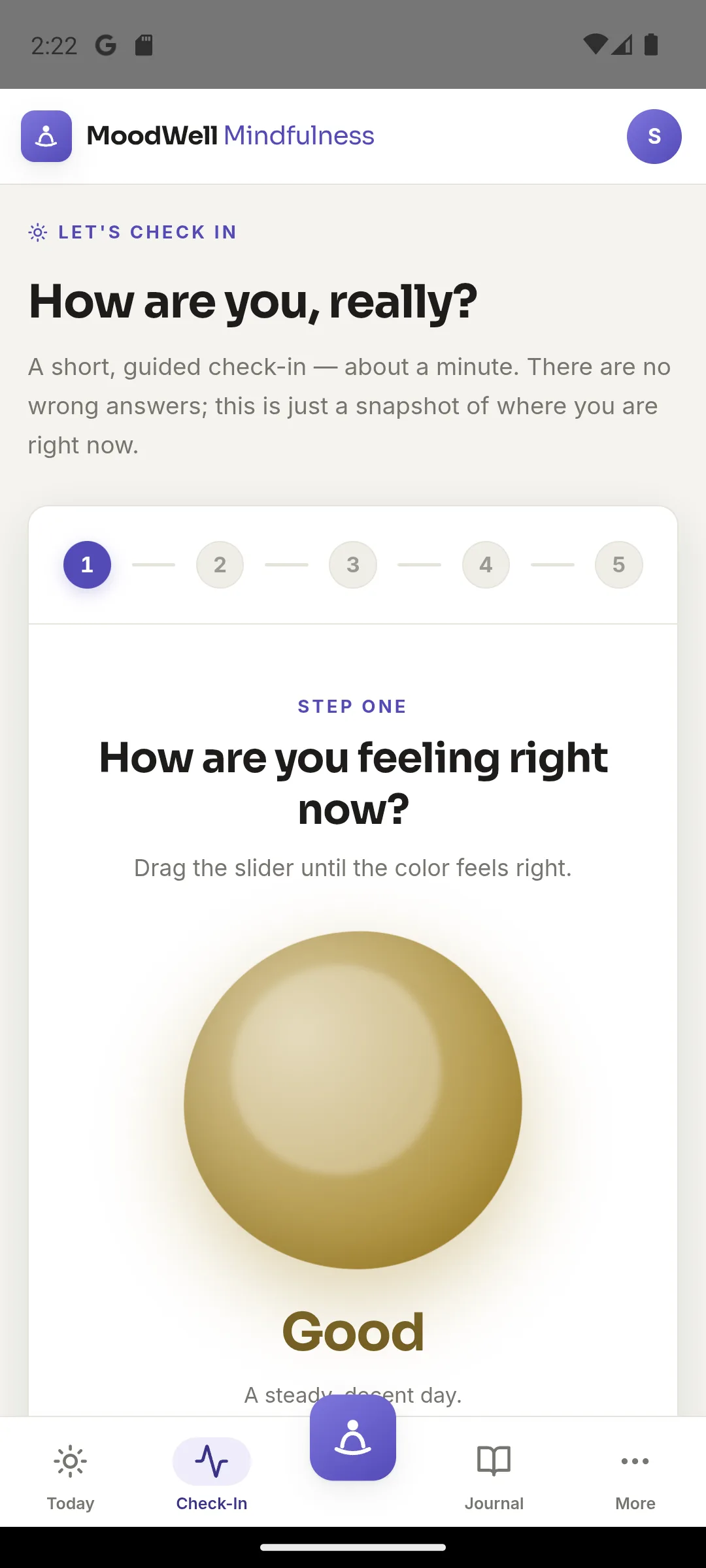
- About a minute, five steps
- Tools
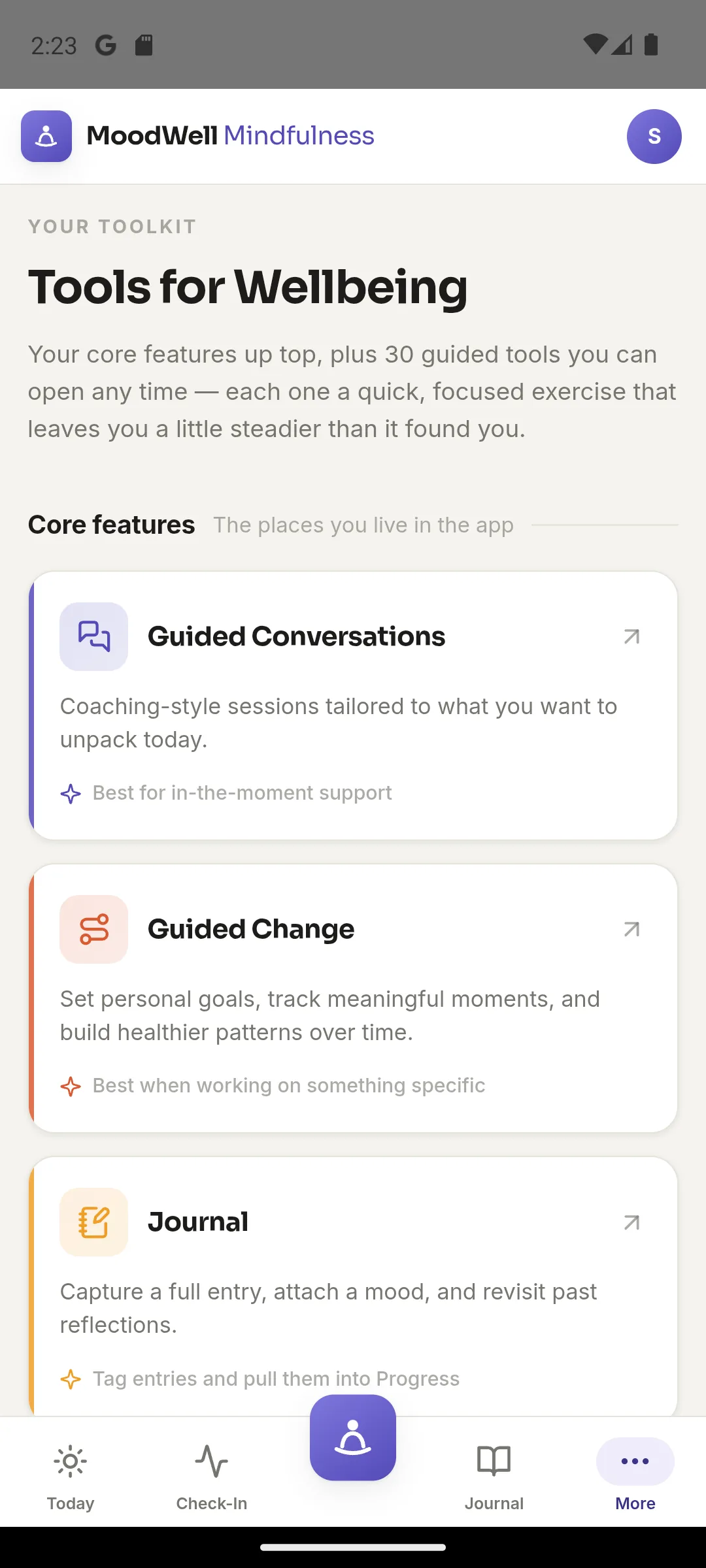
- 30 guided tools
- AI
- Reflections & guided conversations
Mood is the context every other number is missing
A missed workout, a skipped meal, a bad night: the why is usually emotional, and it's the part most trackers leave out. Mental-wellbeing apps, meanwhile, rarely see your training, food, or plan.
Mindfulness had to be quick enough to use every day and gentle enough that it never feels like homework.
The Mindfulness layer, feature by feature.
Mood check-ins
Record mood, stress, and energy in about a minute, then add an influence or a note.
Journaling
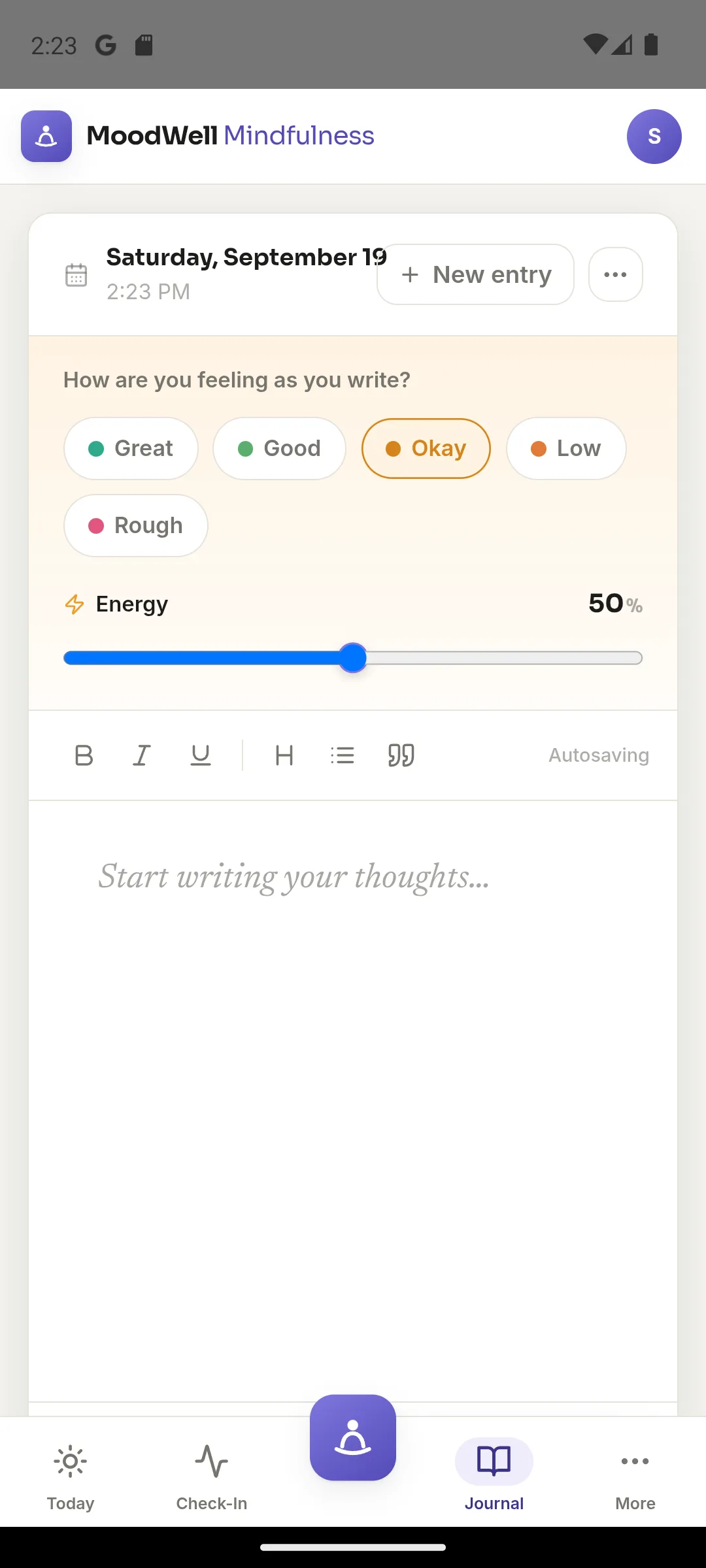
Write entries with mood and energy attached, and ask for an AI reflection when you want prompts to go deeper.
Guided Conversations
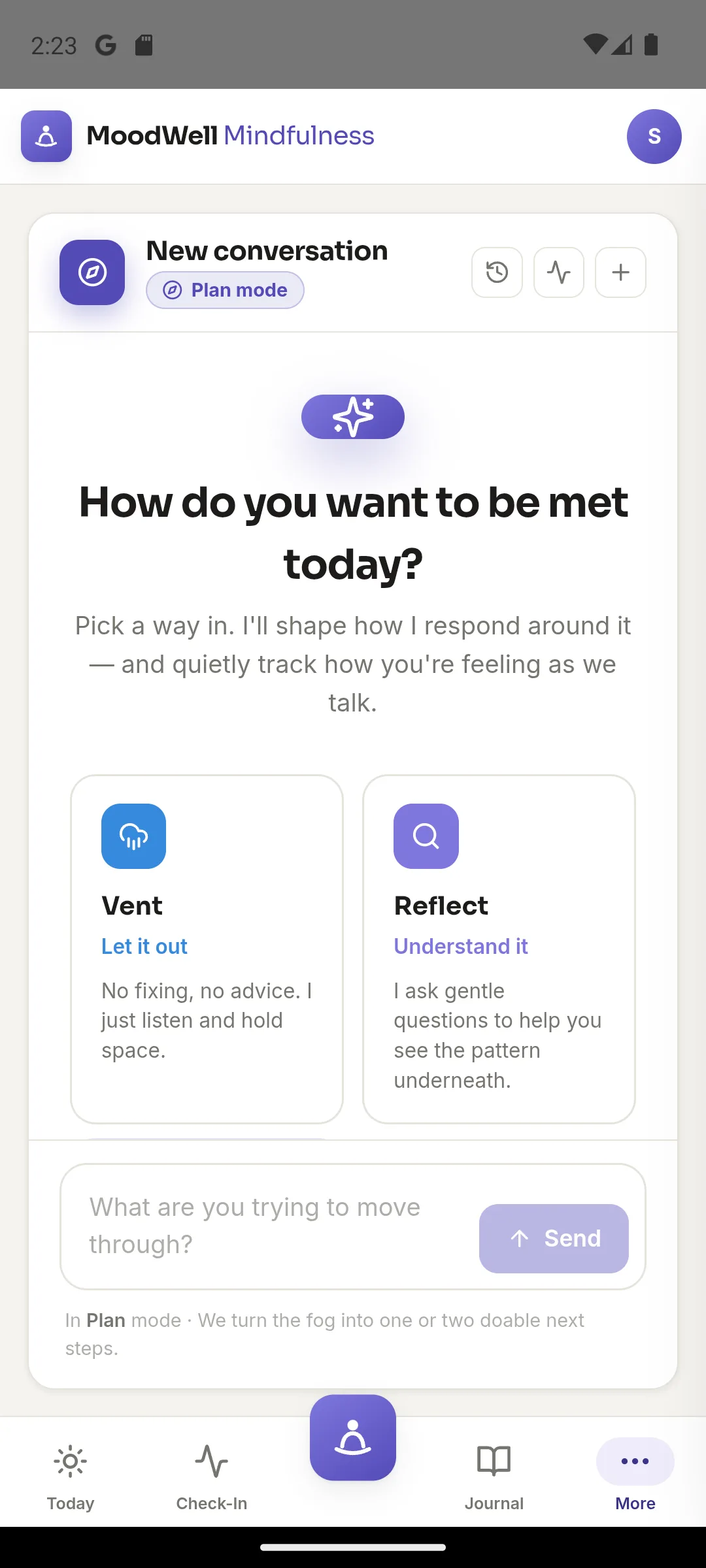
Talk through a situation in Vent, Reflect, Plan, or Calm mode. The guide adapts how it responds.
Guided Change
For an ongoing goal, keep your attempts, observations, and progress in one record.
Daily Focus and Positivity
Choose from three AI-generated focus actions, or a short reflection and activity idea for the day.
30 wellbeing tools
Breathing, grounding, emotion naming, thought reframing, and momentum tools, each a quick, focused exercise.
The calls that shaped it.
- 01
Modes are separate from personas
Vent, Reflect, Plan, and Calm shape a conversation; the coach persona shapes the voice. Keeping them separate means you choose what you need without changing who you talk to.
- 02
The calming tools never wait on AI
Breathing guides, muscle relaxation, focus sprints, and reset walks run without AI, so they're always instant and never cost a credit.
- 03
Patterns are prompts, not proof
Mood is compared against your own normal range, and a pattern is framed as a starting point for reflection, not proof that one thing caused another.
- 04
Vent means no fixing
In Vent mode the guide listens and holds space instead of jumping to advice. Sometimes that's the whole job.
Where AI helps
AI is a conversation partner you invite in. It's never the default.
Journal reflection
Suggests prompts to explore an entry you've written.
Only when you ask.
Guided Conversations
Coaching-style sessions shaped by the mode you choose.
Generated by software, not a therapist.
Daily Focus & Positivity
Three focus actions to choose from, or a short reflection for the day.
AI-assisted tools
Grounding, emotion naming, thought reframing, and other tools that respond to what you enter.
What it won't do.
Not therapy
Coach personas and other AI outputs are generated by software, not people, and Moodwell does not diagnose or treat mental-health conditions.
Your normal, not a norm
Mood, stress, and energy are compared to your own usual range, not a population benchmark.
More of the build.
Health
Medication, supplement, GLP-1, and peptide tracking, with a cited safety check that never fakes an all-clear.
AI & integrations
13 coach personas with identical permissions, a credit model, review-before-save, and read-only Health Connect.
Fitness
Set-by-set logging, weekly routines, and a strength index built entirely from your own log.
Nutrition
Six capture methods, adaptive calorie targets, and meal planning on the shared weekly plan.
Discoverability
184 pages, a markdown twin for each, llms.txt, and explicit content signals for search and AI assistants.
Try Moodwell.
Android beta applications are open and the iOS waitlist is live. Plans are $9.99 a month or $99 a year, with a 7-day trial.
Building an AI product of your own, or bringing AI into an enterprise team?

