Build a training routine you can keep.
Fitness is where Moodwell earns daily use: log every set fast, plan the week around real life, and watch strength move over time. All of it comes from your own records, sitting next to the food, health, and mood data that explain a good or bad session.
- Layer
- Fitness
- Core loop
- Plan → log → review
- AI
- Optional, credit-based
- Platforms
- Android beta · Desktop web
Training data is only half the story
Workout apps are good at counting sets and bad at context. A stalled squat looks like a programming problem until you see the short sleep, the missed meals, or the stressful week sitting next to it, and those live in other apps.
I wanted a training log fast enough to use between sets, honest about what it can measure, and connected to everything else that moves performance.
The Fitness layer, feature by feature.
Set-by-set logging
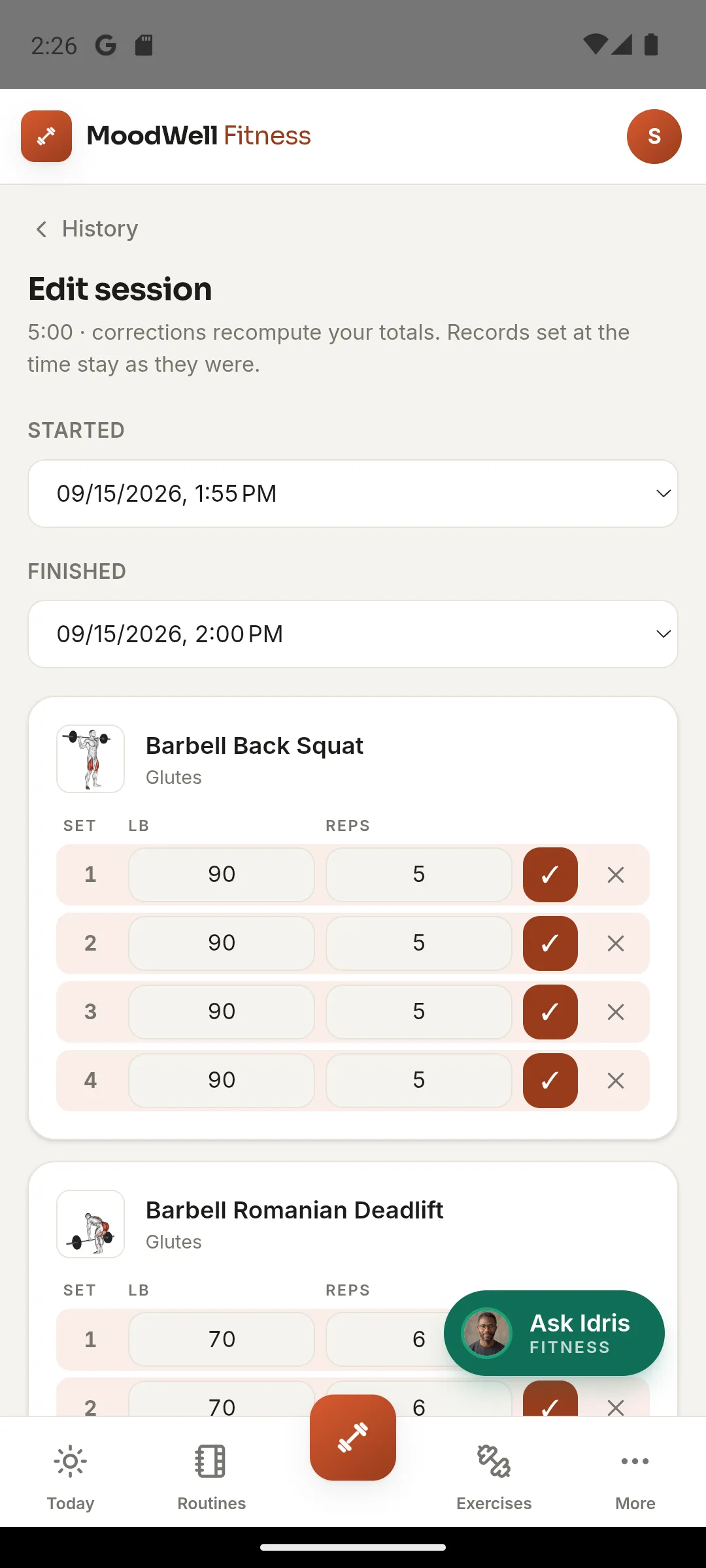
Start a session, log reps and weight for each set, and review the completed workout. Edits recompute totals without rewriting records set at the time.
Routines that fit your week
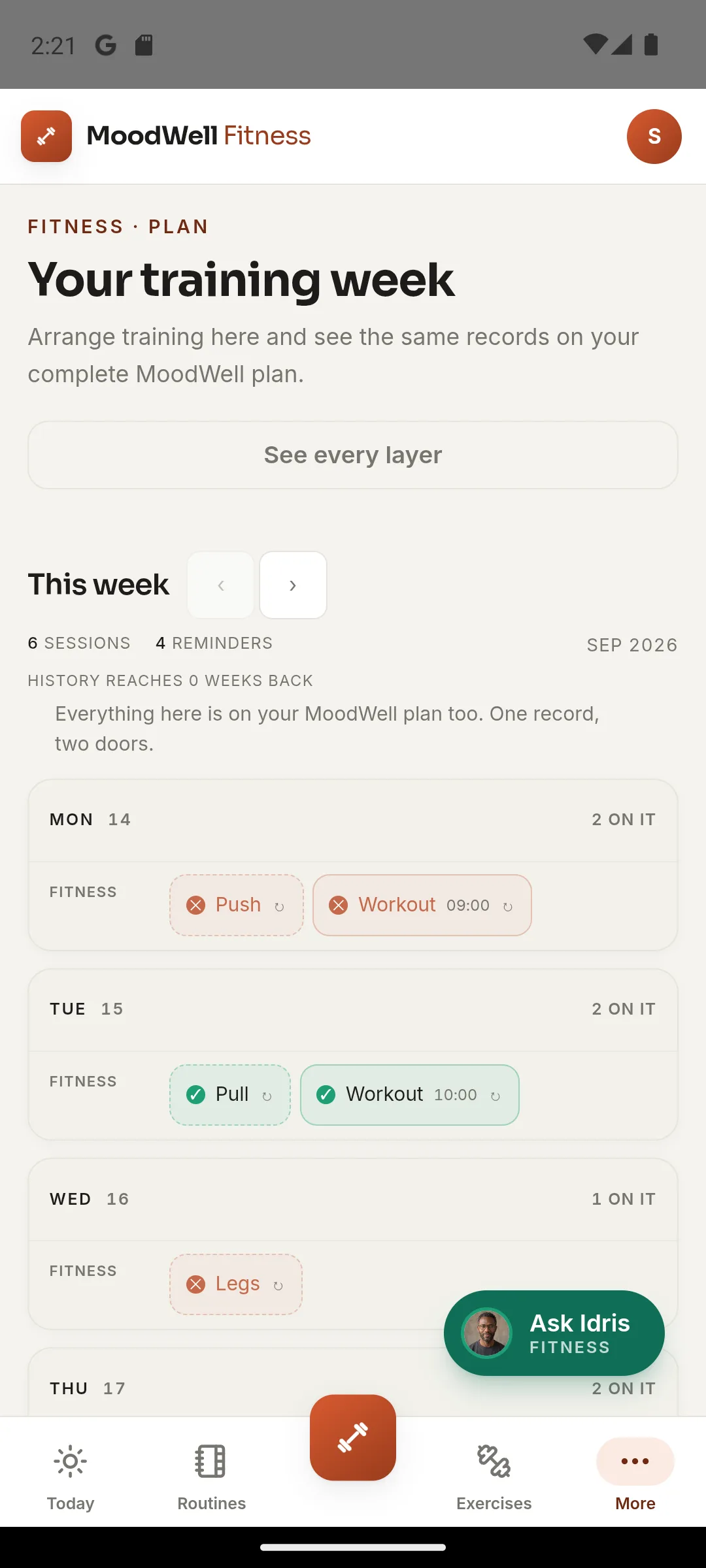
Start from a program, an AI draft, or a blank routine. Pick exercises, set targets, and arrange sessions on the shared weekly plan.
Strength and body tracking
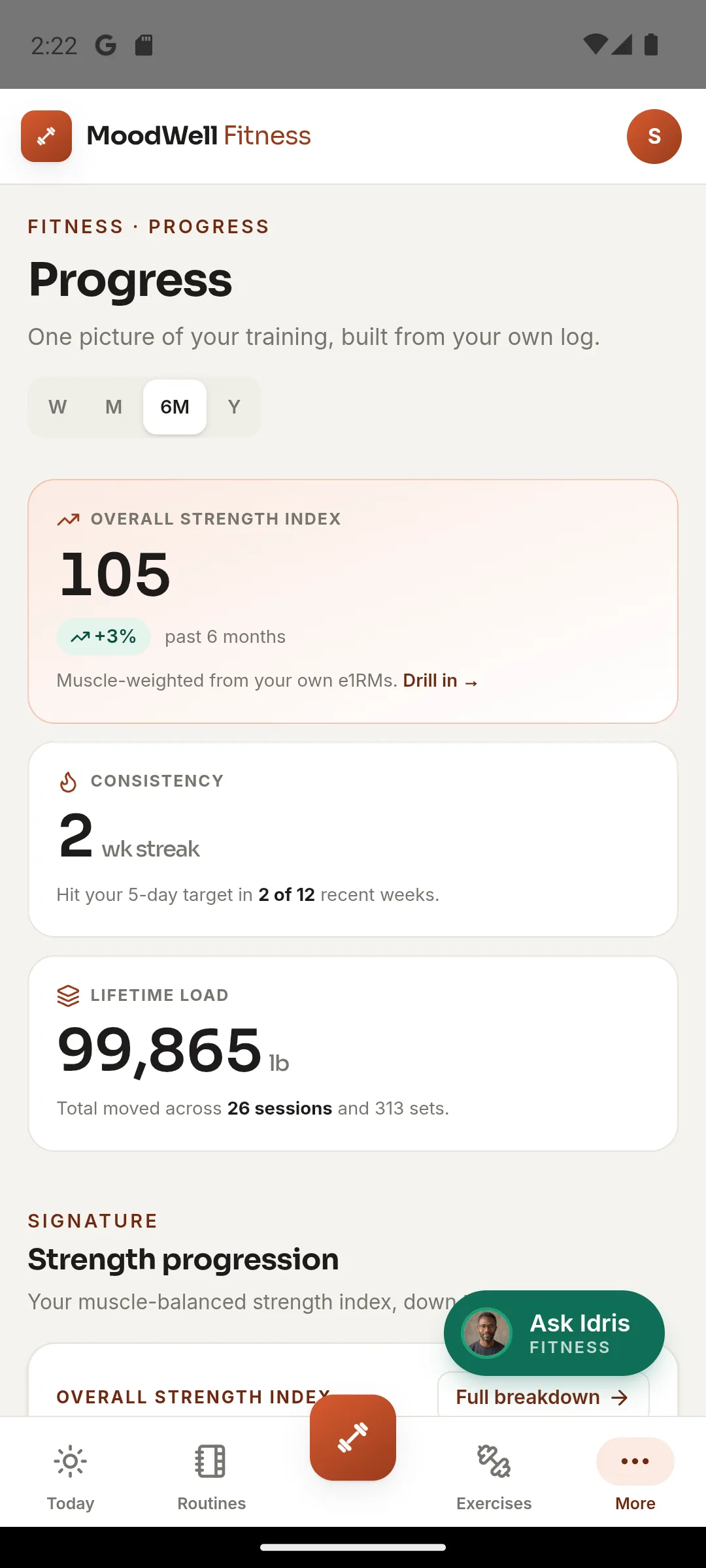
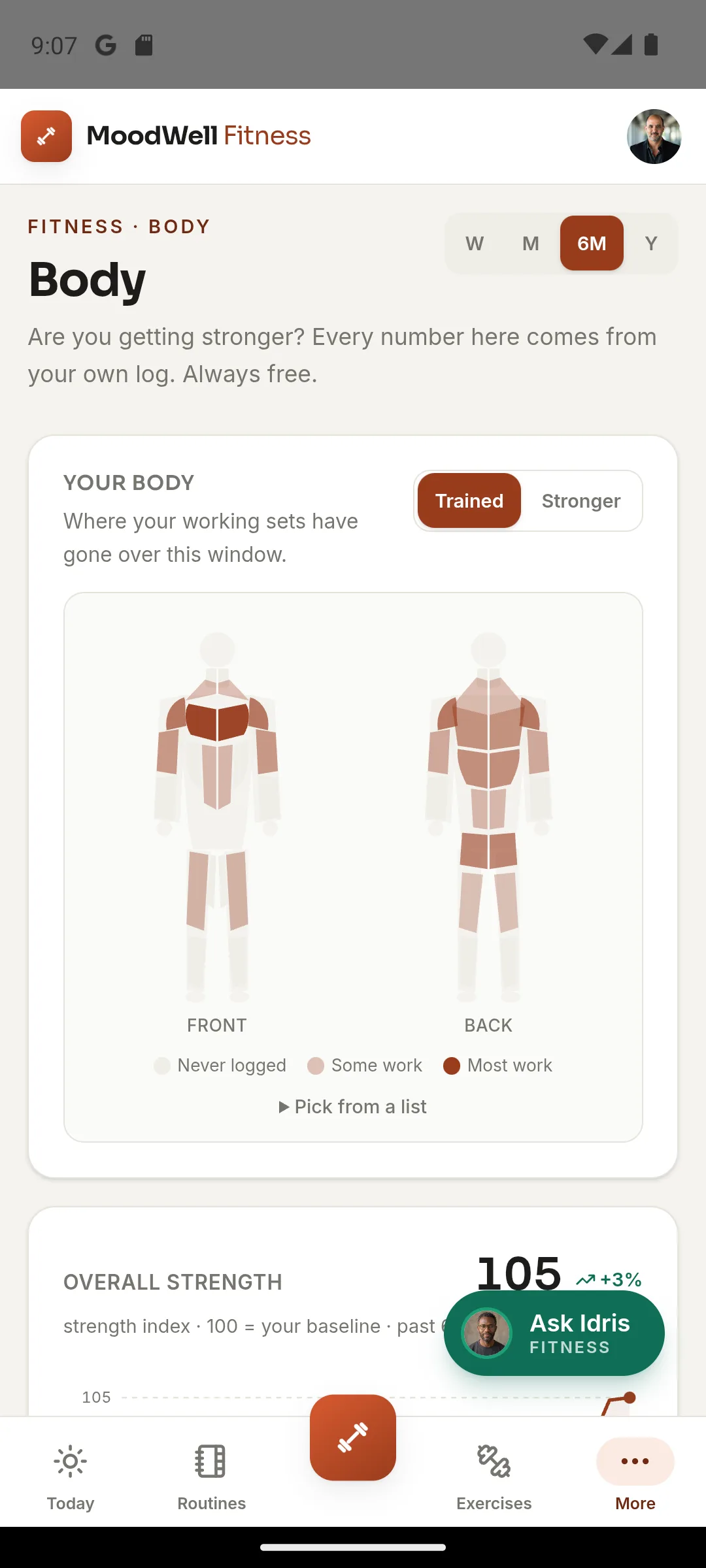
A muscle-weighted strength index, per-movement strength history, a muscle map, and body measurements compared over time.
Exercise library
Search and filter movements by body part and equipment, and inspect one before adding it to a routine.
Records and history
Personal records linked to the workouts that set them, plus every completed session and its summary.
Injury and discomfort notes
Record an injury or discomfort so the context is still there when you look back at a stretch of training.
The calls that shaped it.
- 01
Label estimates as estimates
Strength numbers are derived from logged sets, not measured physiology, and the product says so. A trend you can trust beats a precise-looking number you can't.
- 02
Corrections don't rewrite history
Editing a session recomputes totals, but personal records keep the values they had when they were set, so the log stays an honest record of what happened.
- 03
Progress views are always free
Strength, body, and history screens come straight from your own log and never spend AI credits. AI is reserved for drafting and conversation.
- 04
Training sits on the shared plan
Workouts are scheduled on the same weekly plan as meals, doses, and check-ins. One record, two doors: the Fitness view and the whole-week view.
Where AI helps
AI helps you plan and ask questions. It never logs a set for you.
AI routine drafts
Generates a starting routine from your goals and schedule, which you edit before saving.
Uses credits. Doesn't replace professional training advice.
Ask the coach
A contextual coach button on every Fitness screen answers questions about your recorded routine and history.
Answers come from your own logged data.
What it won't do.
Not a substitute for a trainer
AI-assisted routine creation does not replace professional training advice.
Derived, not measured
Strength estimates are derived from logged workout data, not direct physiological measurements.
More of the build.
Discoverability
184 pages, a markdown twin for each, llms.txt, and explicit content signals for search and AI assistants.
Nutrition
Six capture methods, adaptive calorie targets, and meal planning on the shared weekly plan.
Health
Medication, supplement, GLP-1, and peptide tracking, with a cited safety check that never fakes an all-clear.
Mindfulness
One-minute check-ins, journaling, guided conversations, and 30 short wellbeing tools.
AI & integrations
13 coach personas with identical permissions, a credit model, review-before-save, and read-only Health Connect.
Try Moodwell.
Android beta applications are open and the iOS waitlist is live. Plans are $9.99 a month or $99 a year, with a 7-day trial.
Building an AI product of your own, or bringing AI into an enterprise team?

