This happened three times in four weeks last fall, and each time revealed something more unsettling than the disruption itself.
The Pattern Emerges
On October 20, 2025, a bug in Amazon Web Services' DynamoDB automation created an empty DNS record in the us-east-1 region. What should have been a minor hiccup cascaded through dependent systems for over fifteen hours. Banks couldn't process transactions. Slack and Zoom stuttered. Roblox and Snapchat went dark. The global cost reached $1.1 billion in lost productivity and revenue.
A week later, Microsoft's Azure Front Door pushed a faulty configuration change that bypassed safety checks and propagated worldwide. Microsoft 365 went offline for offices everywhere. Xbox Live left gamers staring at error screens. Airlines and retailers watched their systems falter. The pattern was repeating.
Then on November 18, Cloudflare stumbled when a machine-learning feature file for bot detection exploded in size, choking nodes across their global network. Within minutes, huge swaths of the web became inaccessible. Zoom meetings froze. ChatGPT stopped responding. Spotify streams cut out. As AI integrates deeper into web systems, read about preparing for the AI-first web in 2026.
Three different companies. Three different technical causes. But if you look closer, something more troubling connects them.
The Architecture of Cascade
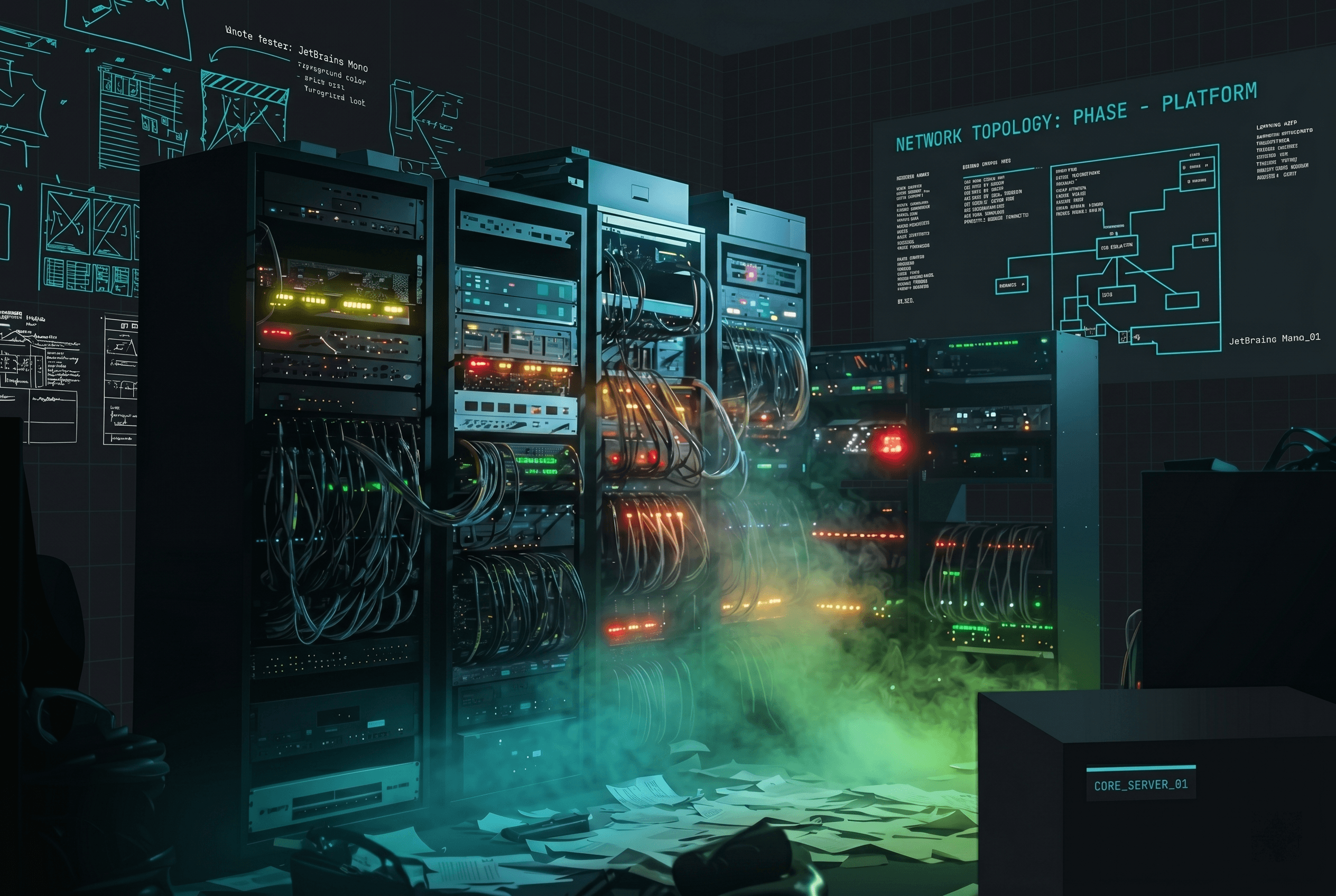
Each incident followed the same brutal logic. A central control plane deployed a change. Shared components buckled under unexpected load. Timeouts piled up. Dependent services unraveled in chaotic sequences. Operators scrambled to lock down configurations, which ironically slowed recovery for everyone else downstream. Stay ahead with our top web development trends for 2025, including scalable architectures.
Independent monitoring from ThousandEyes and Ookla confirmed these were self-inflicted wounds, not attacks. The postmortems all included the same reassuring phrase: "No evidence of a security incident."
But here's what keeps me up at night: the architecture of these accidents is indistinguishable from the architecture of a sophisticated attack.
Think about what just happened. We witnessed, in real time and documented in excruciating detail, exactly how to bring down critical infrastructure at scale. We saw which control planes matter most. We learned how changes propagate through these systems. We discovered where the bottlenecks hide. We mapped the cascade patterns that turn a single failure into global disruption.
Every postmortem is a tutorial. Every incident report is a roadmap.
The SolarWinds Mirror
Consider the infamous SolarWinds attack of 2020, where adversaries compromised a software update mechanism to inject malicious code that spread to thousands of organizations. The attackers succeeded because they understood a fundamental principle: you don't attack endpoints when you can poison the supply chain they all trust.
Now look at these cloud outages through that lens. An adversary with patience and insight into these architectures doesn't need exotic exploits. They can study the accidents that already happen naturally and engineer similar cascades intentionally. They don't target users directly; they target the shared infrastructure that everyone depends on simultaneously.
The October AWS outage showed exactly how quickly a DNS failure in one region can ripple globally. The Azure incident demonstrated how configuration changes can bypass safety mechanisms at scale. The Cloudflare failure revealed how file distribution across edge networks creates simultaneous chokepoints.
These weren't attacks. But they taught us, and anyone watching, precisely how to execute one.
The Economic Incentive
The financial stakes make this even more concerning. During the AWS outage, businesses lost an estimated seventy-five million dollars per hour globally. Large enterprises using these platforms for supply chain management, customer databases, and real-time analytics face average annual losses of forty-nine million dollars from such disruptions when you factor in everything from service-level agreement penalties to regulatory fines and lost deals.
For an adversary with geopolitical or economic motives, these numbers represent something valuable: proof that disrupting these platforms delivers maximum impact with minimal effort. Why develop complex malware to target thousands of individual companies when you can study how to topple the single platform they all run on?
The cost-benefit calculation for attackers becomes disturbingly favorable. Traditional targeted attacks require custom tools, extensive reconnaissance, and careful operation to avoid detection. But a supply-chain or infrastructure attack that mimics these natural failures? The blueprint is already public, stress-tested by the companies themselves, and documented in detail.
The Sovereignty Blindspot
There's another dimension that security researchers whisper about but rarely address publicly. Today, tax portals in Europe run on Azure. Police databases in Asia sit behind Cloudflare. Hospitals worldwide tie their monitoring systems to AWS infrastructure. A single misconfiguration in northern Virginia can freeze operations in São Paulo, Berlin, and Wellington simultaneously.
Nation-states track these dependencies obsessively. Each accidental outage provides intelligence about detection times, damage radius, and recovery procedures. Chinese, Russian, and Iranian security services don't need to test their own attack theories; they can watch American companies test them inadvertently and learn from the results.
This isn't speculation. We know from disclosed documents and security briefings that advanced persistent threat groups study exactly these kinds of dependencies. When a cloud provider accidentally demonstrates that a configuration error can disable services for half the internet, that information enters threat models and attack planning.
The October and November outages didn't just cost billions in immediate economic damage. They provided free reconnaissance on critical infrastructure vulnerabilities to adversaries who are absolutely paying attention.
What Actually Changes
After each outage, the affected company publishes a postmortem explaining what went wrong and what they've fixed. Teams update runbooks. Engineers add validation checks. Executives promise it won't happen again. We tell ourselves the bug is fixed and move on.
But the fundamental architecture remains unchanged. We still concentrate enormous trust in a handful of platforms. We still design systems that assume these platforms are infallible. We still treat cloud services like utilities without building in the redundancy that actual utilities require.
The hard truth is that building genuine resilience is expensive and complicated. It means maintaining fallback DNS providers. It requires designing applications that can operate in degraded modes when upstream services fail. It demands regular chaos engineering exercises where you intentionally break things to verify your recovery procedures work.
Most organizations skip these steps because the cloud providers seem so reliable. Until they aren't.
The Question That Matters
The question isn't whether something deeper is happening beneath these outages, some conspiracy or hidden cyber campaign. The evidence clearly indicates these were mistakes, not malice.
The real question is whether it matters.
If accidental failures and intentional attacks produce identical results, create the same economic damage, and reveal the same vulnerabilities, does the distinction between accident and attack remain meaningful? When your business loses hundreds of thousands per hour or your critical infrastructure goes dark, the technical cause becomes philosophical.
What matters is that we've built a digital civilization on foundations that fail regularly enough to teach adversaries exactly how to break them intentionally. We've created a world where "it was just a bug" and "it was a coordinated attack" lead to the same headlines, the same losses, and the same disrupted lives.
Every accidental outage is practice. Every incident report is intelligence. Every cascade is a lesson in what works to bring down the systems we've all come to depend on.
The infrastructure isn't going to magically become more resilient. The consolidation won't reverse. The dependencies won't disappear. What changes is whether you've planned for the next failure, accidental or otherwise, or whether you're still betting everything on the assumption that these platforms will always be there.
That assumption just failed three times in four weeks. The question is what you do differently before it fails again.
Frequently asked questions
What is a cloud cascade failure?
It's that nightmare domino effect where one glitch in a cloud setup triggers a chain reaction, taking down everything connected. Take the AWS mess in October 2025: a DNS record went blank in us-east-1, and suddenly banking apps, chat tools, and games all froze. Why? Because today's clouds are a web of interdependencies. Shared control planes mean one failure ripples out fast.
What caused those big cloud outages in fall 2025?
Three hits in four weeks, each a masterclass in how things unravel:
- AWS (Oct 20): DynamoDB automation bug creates an empty DNS record, 15+ hours of chaos, $1.1 billion gone.
- Azure (Oct 27): Bad config change slips past safeguards, nuking Microsoft 365 and Xbox worldwide.
- Cloudflare (Nov 18): ML bot detection file balloons, choking global nodes and blacking out chunks of the web. Different triggers, same story. Central change deploys, shared bits buckle, dependents collapse.
How long do major cloud outages typically last?
Anywhere from 2 to 15 hours for the main fix, like AWS's marathon or Cloudflare's multi-hour drag. But the hangover lingers: cached errors, slow fixes, or your own systems stumbling even after the all-clear.
What is a DNS failure and why does it wreck everything?
DNS is the internet's address book. It turns names like "example.com" into IPs. When it breaks, servers vanish even if they're fine. AWS's empty record? Apps couldn't find databases, global freeze. It's brutal because it hits all at once, no warning.
What could a cloud outage cost my business per hour?
It adds up quick, depending on your setup:
- Overall: AWS outage bled $75 million/hour across businesses.
- Big players: $49 million yearly average from disruptions, including fines and lost deals.
- Smaller ops: $8k–$100k/hour, tied to revenue and cloud reliance. Crunch your own: hourly sales, idle staff, customer fallout, contract hits.
Which cloud provider is the most reliable: AWS, Azure, or Cloudflare?
None nailed it in fall 2025; all went down. Skip the "who's best" chase. Check uptime in your key regions (they're all 99.9%+ yearly, but that sliver of downtime kills). Provider pick matters less than your setup surviving any flop.
Should I go multi-cloud to dodge outages?
If downtime's a deal-breaker (think finance, health), and you've got the chops and budget, yes. It builds buffer. But it's complex and pricey; most do better with redundancy in one provider (multi-zones/regions) plus solid recovery drills. Multi-cloud for the critical stuff, not everything.
How exposed is my industry to these outages?
High-risk spots: finance (payments, trading), healthcare (records, telemed), e-comm (sales, inventory), gaming/streaming, SaaS (your whole product).
Medium: professional services (tools, projects), manufacturing (supply chains, IoT), government (portals).
It's less about sector, more about real-time cloud needs and offline backups.
What are control planes in cloud setups?
They're the command center. They handle configs, deploys, orchestration. Like the brain directing traffic. AWS's DynamoDB glitch? Control plane fail, and every reliant service tanked. They're prime chokepoints because one tweak affects the masses.
How do config errors sneak past cloud safeties?
Safeties like canary rolls or auto-rollbacks exist, but get bypassed by buggy automation (Azure's case), mislabeled "safe" changes, or failed validators. Sometimes they even hinder fixes. Fall 2025 showed: good intentions, but not bulletproof.
What's a supply chain attack in the cloud?
It's hitting the shared backbone: DNS, CDNs, update pipes. So one strike ripples to thousands, like SolarWinds injecting bad code via trusted updates. Clouds are ripe for this; recent outages mapped exactly how to pull it off by targeting those central planes.
How can my business shield against cloud outages?
Short-term (weeks): Multi-DNS failover, degraded modes, quarterly DR tests, provider alerts, offline data stashes.
Medium (months): Circuit breakers, caching for continuity, multi-zone spreads, comms protocols, failure runbooks.
Long (year): Multi-region criticals, chaos programs, full-stack redundancy.
Outages happen. Design to shrug them off.
Do I need a fallback DNS provider?
If $10k+/hour loss hurts, or you're multi-region/regulated, absolutely. Services like Route 53 or Cloudflare switch auto on failure. Cheap insurance (<$100/month) vs. massive hits.
How do I build a disaster recovery plan for cloud fails?
- Alerts: Ensure monitoring tools and provider alerts are configured to notify teams of any service disruptions promptly.
- Communication: Prepare detailed communication plans including message templates, escalation chains, and regular updates to stakeholders.
- Runbooks: Develop comprehensive step-by-step guides for executing failovers, rolling back changes, and restoring services.
- Roles: Assign clear roles such as a disaster commander, team leads, and communication owners to manage tasks effectively during an incident.
- Testing: Conduct quarterly tabletop exercises to simulate scenarios and annual full-scale drills to ensure readiness.
- Reviews: Perform thorough post-mortems after each incident to analyze outcomes and identify areas for improvement.
- Offline backups: Maintain offline copies of critical plans and resources to avoid dependency on the cloud during recovery.
How to tell an accidental outage from a cyber attack?
Accident signs: Quick provider admit, tech details, architecture-match impact, logical recovery, internal-origin confirms.
Attack hints: Vague comms, weird multi-system fails, unauthorized traces, bad timing, bumpy fixes.
But honestly? Response is the same. Fix first, sleuth later. Distinction might not matter in the moment.
Are nation-states watching these outages for attack intel?
Bet on it. Outages hand over gold: Key planes, response speeds, cascade paths, chokepoints, endurance limits. APTs study this stuff. Fall 2025 gave a public masterclass. Design assuming adversaries know your weak spots.

AI-first digital transformation for enterprise growth — building modern web and marketing systems that scale brand, pipeline, and visibility. Strategy and execution, under one operator.